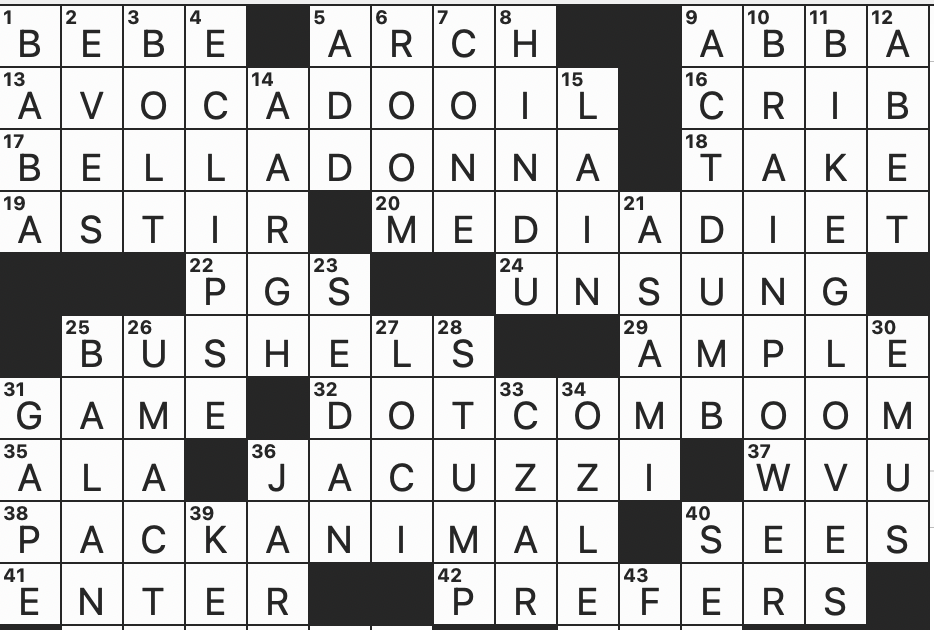
NYT Crossword: Understanding the Easy Level for New Gamers
Stepping into the world of the New York Times Crossword can feel like joining a secret society. For decades, it has captivated millions with its clever wordplay, vast vocabulary, and daily dose of mental gymnastics. Yet, for many new gamers, the sheer reputation of the NYT Crossword can be intimidating. The good news? The journey begins not with a daunting challenge, but with a wonderfully accessible entry point: the easy level. Understanding this gateway is key to transforming curiosity into a fulfilling, long-term puzzle-solving hobby.
The NYT Crossword isn't designed to be universally difficult from the get-go. Instead, it offers a carefully calibrated difficulty curve throughout the week, ensuring that there's a starting point for everyone, from the absolute novice to the seasoned cruciverbalist. This intentional design makes it one of the most welcoming puzzles despite its prestigious standing. If you've ever wondered where to begin or felt overwhelmed by the thought of tackling a cryptic grid, rest assured that the "easy" designation is there specifically for you. It's an invitation, not a barrier, and mastering it sets the foundation for a lifetime of engaging with one of the world's most beloved word puzzles.
Decoding the NYT Crossword's Easy Level: What to Expect
When we talk about the NYT Crossword's "easy level," we are primarily referring to the puzzles published on
Mondays and Tuesdays. These early-week grids are meticulously crafted to be approachable for new gamers, serving as a gentle introduction to the crossword solving experience. But what exactly makes them "easy" compared to their mid-week or weekend counterparts?
*
Straightforward Clues: Monday puzzles, in particular, feature clues that are largely direct and literal. You'll often find clear definitions, common synonyms, or direct references to well-known facts. For example, a clue for "CAT" might be "Feline pet" rather than a more cryptic "Whiskered companion that often purrs." Tuesdays introduce a touch more wordplay but generally remain highly accessible.
*
Familiar Vocabulary: The answers predominantly consist of common English words, everyday phrases, and well-known proper nouns. You won't be expected to recall obscure historical figures or highly specialized scientific terms. This focus on general knowledge makes the initial solving process much less daunting.
*
Consistent Theming: Early-week puzzles often have very clear and obvious themes. The theme answers are usually easy to spot and help solvers get a foothold in the grid. For instance, a theme might involve words ending in "BALL," and once you've figured out one theme answer, you have a strong hint for the others.
*
Less Complex Wordplay: While all crosswords involve some form of wordplay, Monday and Tuesday puzzles minimize the more intricate types like puns, anagrams, or riddles that become prevalent later in the week. The wordplay you encounter will be relatively simple and transparent, designed to gently introduce you to the mechanics without frustrating you.
*
Standard Grid Patterns: The structure of the grid itself tends to be more straightforward, often with fewer "open" areas (large sections with few black squares) and more segmented sections, which can make it easier to isolate and solve smaller portions of the puzzle.
Think of it like learning to ride a bike with training wheels. The easy level provides the stability and predictability you need to build confidence and understand the basic mechanics before you tackle the more challenging terrain of a Wednesday or Saturday puzzle. It's a deliberate pedagogical approach, designed to nurture new talent and keep solvers engaged rather than overwhelmed.
Strategies for Conquering Your First Crosswords
Starting with the easy level is just the first step; employing effective strategies will truly unlock your potential and accelerate your progress. Here are some actionable tips for new gamers looking to master the NYT Crossword:
1.
Always Start with Monday: This cannot be stressed enough. Consistently tackle the Monday puzzle until you feel comfortable, then move to Tuesday, and so on. Don't jump to a Saturday puzzle hoping for a miracle; you'll only get discouraged.
2.
Look for Intersecting Words: The beauty of a crossword lies in its intersections. If you're stuck on an across clue, check the down clues that cross it. Often, filling in one letter from a known answer can provide the critical hint needed for a stubborn clue.
3.
Fill in What You Know First: Don't try to solve the puzzle in order. Scan the entire grid and fill in every answer you're absolutely sure of. Even a few letters can create a cascade of solutions by revealing parts of other words.
4.
Pay Attention to Clue Grammar and Punctuation: Crossword clues are precise. If a clue ends in "(abbr.)" the answer will be an abbreviation. If it's plural, the answer will be plural. If it's in the past tense, so is the answer. This is a huge helper for narrowing down possibilities.
5.
Don't Be Afraid to Guess (Intelligently): If you have a strong hunch, put it in. The worst that can happen is it's wrong, and you can erase it. Sometimes, seeing how a guessed letter interacts with other clues can confirm or deny your suspicion.
6.
Learn Common "Crosswordese": As you solve more puzzles, you'll notice certain words reappear frequently due to their useful letter combinations or common associated clues. Examples include "ERIE" (canal/lake), "OREO" (cookie), "OSLO" (capital), "ELSE" (other). Recognizing these can speed up your solve time significantly.
7.
Practice, Practice, Practice: Consistency is key. The more puzzles you do, the better you'll become at recognizing patterns, understanding clue styles, and expanding your mental lexicon.
8.
Embrace the "Aha!" Moment: Sometimes, the key to a seemingly difficult clue is a simple shift in perspective. Crossword constructors love to play on words and offer misdirection. Learning to spot these tricks is part of the fun. For example, "Leaves of a book" might refer to pages, but it could also refer to the act of departing.
Beyond the Crossword: Exploring The Same Level Of Difficulty NYT Across Puzzles
While the NYT Crossword offers a clear progression in difficulty, the New York Times Games suite provides a diverse ecosystem of puzzles, each with its own charm and challenge. For many players, the search isn't just for another crossword, but for a puzzle that offers
the same level of difficulty NYT quality and engagement, but perhaps in a different format. This is where the broader puzzle challenge comes into play.
The NYT has expanded its offerings significantly, moving beyond just the traditional crossword to include a variety of beloved word and logic games. For a new gamer who finds the Monday crossword to be just the right amount of mental stimulation, they might also find a similar satisfaction in puzzles like:
*
The Mini Crossword: A bite-sized daily puzzle, typically 5x5 or 7x7, designed for a quick solve (often under a minute). For some, its brevity and direct clues make it feel like
the same level of difficulty NYT Monday crossword offers, but in a compressed form. It's an excellent warm-up or a standalone quick brain break.
*
Wordle: Gaining immense popularity, Wordle challenges players to guess a five-letter word in six tries. The beauty of Wordle lies in its single-answer focus and logical deduction. For many, its daily, accessible challenge provides an experience that, while different in mechanics, feels like
the same level of difficulty NYT crossword solvers appreciate from their early-week puzzles. It requires vocabulary and strategic thinking without being overly complex. For those who enjoy
NYT Wordle Daily Hints: Solving September Puzzles, you might find that the initial learning curve offers
the same level of difficulty NYT puzzle-solvers often experience with early-week crosswords.
*
Spelling Bee: This game tasks players with forming as many words as possible from a set of seven letters, always including the central letter. It's a test of vocabulary and word recognition, and while it can become quite challenging to find all words, the initial goal of finding a few provides a gentle, satisfying experience comparable to an easy crossword.
*
Sudoku: For those who prefer numbers to letters, the NYT also offers Sudoku puzzles. While a completely different skill set, the basic Sudoku puzzles can provide a similar entry-level logical challenge that aligns with the "easy" designation of word puzzles.
The brilliance of the NYT puzzle ecosystem is its ability to cater to diverse preferences while maintaining a consistent standard of quality and intellectual engagement. A player who masters the Monday crossword might then seek out a daily Wordle for a similar mental workout, or dive into the Mini Crossword for a quick hit of achievement. The broader
NYT Puzzle Challenge: From Easy Crosswords to Wordle Hints ecosystem truly offers something for everyone, often allowing players to find their sweet spot of enjoyment and challenge across different formats. This diversity ensures that regardless of your preferred puzzle type, you can always find
the same level of difficulty NYT offers in its carefully curated selection of daily brain teasers.
Conclusion
Embarking on your NYT Crossword journey at the easy level is not just recommended; it's the most effective path to becoming a confident and skilled solver. The Monday and Tuesday puzzles are meticulously designed to be welcoming, offering straightforward clues and familiar vocabulary that build a strong foundation. By employing simple strategies like starting with what you know, paying attention to clue specifics, and practicing regularly, new gamers can quickly develop the intuition needed to tackle more complex grids. Beyond the traditional crossword, the New York Times Games suite provides a rich landscape of puzzles like Wordle, the Mini, and Spelling Bee, allowing players to explore other avenues that offer
the same level of difficulty NYT quality and engaging challenge. So, grab a pencil (or open your app!), embrace the easy level, and discover the immense satisfaction of solving one of the world's most enduring and beloved puzzles. Your daily dose of mental fun awaits!